The Road to Redemption: Preparing for Holy Week
As we draw closer to Good Friday and Easter, many Christian traditions enter a season of fasting, repentance, and deeper prayer next week. It is a time to slow down, to examine our hearts, and to remember the suffering and victory of Christ. Yet even as we practice these spiritual disciplines, it is important to pause and ask a deeper question: What is the heart of God behind Good Friday and Easter?
These days are not merely dates on a church calendar or moments of solemn remembrance. They reveal the very center of God’s love and His plan of redemption woven through all of Scripture. From the first promise in the garden of Eden to the empty tomb and beyond, Good Friday and Easter unveil a God who does not abandon His creation but moves toward it in mercy, justice, and sacrificial love.
Good Friday and Easter are not late additions to the Christian story. They are the very heartbeat of Scripture. From the first pages of Genesis to the final vision of Revelation, the Bible tells one unified story: God’s holy love pursuing a fallen people through sacrifice, atonement, and resurrection life. The cross and the empty tomb are not divine improvisations; they are the eternal plan of God revealed in time.
Scripture calls this plan “the Lamb slain from the foundation of the world” (Rev. 13:8). In other words, before humanity ever fell, God already knew the cost of redeeming us—and chose love anyway.
1. The Need for Good Friday Begins in Genesis
The story begins in a garden. Humanity was created in God’s image to live in covenant fellowship with Him. But Genesis 3 records the fall—an act of rebellion that fractured creation and severed communion with God.
The Hebrew word for sin in Genesis 3 carries the idea of missing the mark and breaking trust. When Adam and Eve disobeyed, death entered the world. Yet immediately, God spoke a promise:
“I will put enmity between you and the woman, and between your seed and her seed; he shall bruise your head, and you shall bruise his heel.” (Gen. 3:15)
This is often called the proto-evangelium—the first gospel. The Hebrew word for “seed” (zeraʿ) points to a coming descendant who would crush the serpent. The serpent would wound Him (“bruise His heel”), but that wound would not be final. Already, the shadow of Good Friday and Easter appears: suffering, followed by victory.
Then in Genesis 3:21, God makes garments of skin for Adam and Eve. The Hebrew word for atonement later used in Scripture is כָּפַר (kaphar), meaning “to cover.” The first shedding of blood to cover sin foreshadows the greater covering to come. A sacrifice was required. Innocent life for guilty life.
From the very beginning, redemption required a lamb.
2. The Pattern of Sacrifice: A Road to the Cross
Throughout the Old Testament, God builds a pattern that points toward Good Friday.
Abel’s Sacrifice (Genesis 4)
Abel offers a lamb, and God accepts it. Hebrews later tells us this sacrifice pointed forward to Christ, the righteous one whose blood speaks a better word.
Abraham and Isaac (Genesis 22)
Abraham is asked to offer Isaac. Isaac carries the wood for his own sacrifice up Mount Moriah. When Isaac asks where the lamb is, Abraham responds:
“God will provide for Himself the lamb.” (Gen. 22:8)
The Hebrew phrase יְהוָה יִרְאֶה (YHWH yir’eh) means “The LORD will provide.” A ram is provided in Isaac’s place—but the greater Lamb is still coming. On that same mountain region centuries later, Jesus would carry the wood of the cross.
3. The Passover: A Prophetic Picture of Good Friday
In Exodus 12, Israel is delivered through the blood of a lamb. The lamb must be without blemish. Its blood is placed on the doorposts. When judgment comes, God says:
“When I see the blood, I will pass over you.”
The Hebrew word for Passover, פֶּסַח (pesach), carries the idea of passing over or sparing. The lamb dies so the people can live. This is Good Friday in shadow form.
Paul later declares:
“Christ, our Passover lamb, has been sacrificed.” (1 Cor. 5:7)
Good Friday is the ultimate Passover. The wrath of sin passes over those covered by the blood of Christ.
4. The Sacrificial System and the Day of Atonement
The entire Levitical system prepares the way for the cross. The Day of Atonement (Leviticus 16) shows two goats: one sacrificed, one sent away bearing sin.
The Hebrew word for atonement, כָּפַר (kaphar), means “to cover” or “wipe away.” But these sacrifices had to be repeated yearly. They pointed beyond themselves.
Isaiah 53 then brings the picture into sharp focus:
“He was pierced for our transgressions… the LORD has laid on him the iniquity of us all.”
The Hebrew word for “pierced” (chalal) literally means “wounded through.” The Suffering Servant bears sin, remains silent before His accusers, and dies for the people. This is Good Friday written centuries in advance.
Psalm 22 echoes it with startling clarity: pierced hands and feet, mocked by onlookers, garments divided by casting lots. The cross was always in God’s plan.
5. The Promise of Resurrection: Easter Foreshadowed
The Old Testament does not only point to suffering—it points to resurrection.
The Sign of Jonah
Jonah spends three days in the fish. Jesus later says this is a sign of His own burial and resurrection.
Hosea 6:2
“After two days He will revive us; on the third day He will raise us up.”
The “third day” becomes a recurring biblical pattern of divine intervention and new life.
Firstfruits
In Leviticus 23, Israel celebrates the Feast of Firstfruits. The first sheaf of harvest is offered to God as a promise of more to come. Paul later writes:
“Christ has been raised… the firstfruits of those who have fallen asleep.” (1 Cor. 15:20)
Easter is the firstfruits of a new creation.
Isaiah’s Vision
Isaiah declares that God will swallow up death forever (Isa. 25:8). Resurrection hope is embedded deep in Israel’s story.
6. Jesus Throughout the Old Testament
Jesus is present across the Old Testament in promise, pattern, and presence.
- The promised seed of the woman (Gen. 3:15)
- The Passover Lamb (Exodus 12)
- The greater Moses and mediator
- The Son of David, eternal King
- The Suffering Servant (Isaiah 53)
- The Son of Man (Daniel 7)
- The “Angel of the LORD,” a divine messenger who speaks as God Himself
Though not always named “Jesus,” He is everywhere anticipated.
7. Why Good Friday Was Necessary
God is love—but God is also holy. Sin cannot simply be ignored. The Hebrew word for righteousness, צֶדֶק (tsedeq), reflects God’s moral perfection. Justice demands that sin be addressed.
At the cross, justice and mercy meet. Jesus bears the penalty of sin. The New Testament uses the Greek word ἱλαστήριον (hilastērion)—a propitiation, a mercy seat. Jesus becomes the place where God’s wrath is satisfied and forgiveness is given.
Good Friday reveals the depth of God’s love: He does not stand distant from suffering but enters into it.
8. Why Easter Was Essential
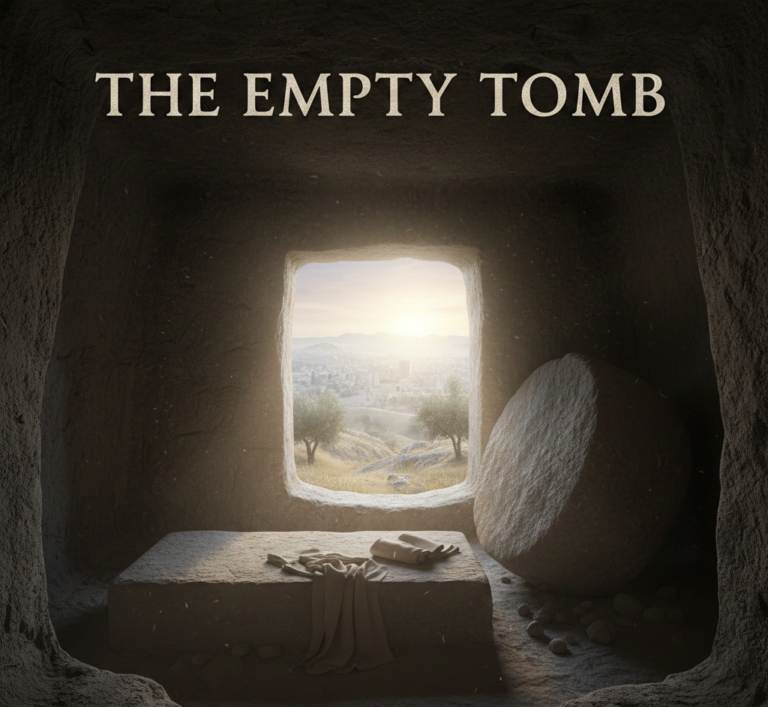
If Good Friday shows the cost of sin, Easter shows the victory over it. Without resurrection, the cross would be a tragedy. With resurrection, it becomes triumph.
The resurrection vindicates Jesus as the Son of God, defeats death, and inaugurates new creation. The Hebrew concept of life, חַיִּים (chayyim), is not mere survival but flourishing in God’s presence. Easter restores this life.
Paul writes that if Christ is not raised, our faith is in vain. But because He is raised, death has lost its sting.
9. From Genesis to Revelation
The Bible ends with a vision of a Lamb on the throne (Revelation 5). The same Lamb promised in Genesis now reigns in glory. The cross and resurrection are the center of history.
Good Friday shows us the seriousness of sin.
Easter shows us the power of God’s love.
Together, they reveal the heart of the gospel: God’s justice satisfied, God’s mercy poured out, and God’s people restored.
Prayer
Lord God,
From the beginning You planned redemption.
In the garden, You promised a Savior.
Through the centuries, You revealed the Lamb.
On Good Friday, You bore our sin.
On Easter morning, You defeated death.
Help us see the cross not as a distant event but as the place where Your love met our deepest need.
Teach us to live as resurrection people—freed, forgiven, and filled with hope.
May our lives reflect the holiness and grace purchased for us by Christ.
Thank You for the Lamb who was slain and who lives forever.
We worship You, the God of justice, mercy, and redeeming love.
In the name of Jesus,
Amen.