
CHRISTMAS AS GOD’S ANSWER TO A BROKEN WORLD
As the world prepares for Christmas—celebrations, holidays, year-end reflections, familiar songs, and carefully planned gatherings—there is a sense of pause. A moment to breathe. A season that invites warmth, generosity, and hope. And yet, just beneath the glow of lights and tradition, the world remains deeply unsettled.
Wars rage on. Violence has become disturbingly routine. Cruelty is often excused. Poverty grows alongside excess. Truth feels increasingly fragile. For many, hope is no longer assumed—it is searched for.
This tension is not new. Scripture names it clearly. This is Genesis 3 still unfolding—humanity repeating the ancient fracture, now magnified by power, technology, and reach.
Creation itself groans because it has been bent away from God’s original design. God did not create the world for endless war, children growing up in fear, power without accountability, or progress without wisdom. Creation was meant to be ordered, relational, and life-giving—rooted in communion with God and with one another.
And it is into this world—not an ideal one, not a healed one—that Christmas comes.
“In the beginning was the Word, and the Word was with God, and the Word was God… And the Word became flesh and dwelt among us.” (John 1:1,14)
John does not begin the Christmas story with shepherds or angels, but with eternity. Before light, land, or life existed, the Word was already there. Through Him all things were made. He is not God’s response to human failure; He is the foundation of creation itself.
For Jewish readers, the Word represented God’s active, creative, revealing presence. For Greek readers, Logos meant the underlying meaning that held the universe together. John gathers both ideas and makes an astonishing claim: the Word is not an idea or a principle. The Word is a Person. And this Word became flesh. God did not remain distant. He did not send another message or law. He came Himself. The Creator entered creation. The Light stepped into darkness.
Humanity waited centuries for this moment. Prophets spoke. Kings failed. Sacrifices multiplied but never healed the wound. By the time Jesus was born, religion had structure but no power, empires had strength but no justice and humanity had exhausted every attempt to save itself. That is when Christmas happens—not when the world is ready, but when it is desperate.
Jesus is born in Bethlehem, not because it is picturesque, but because it is purposeful. Bethlehem, which in Hebrew is “Beit Lechem”, means “House of Bread”—a fitting name, since Jesus, the “Bread of Life,” was born there. From the very beginning, His birth signals spiritual sustenance and the fulfillment of God’s provision.
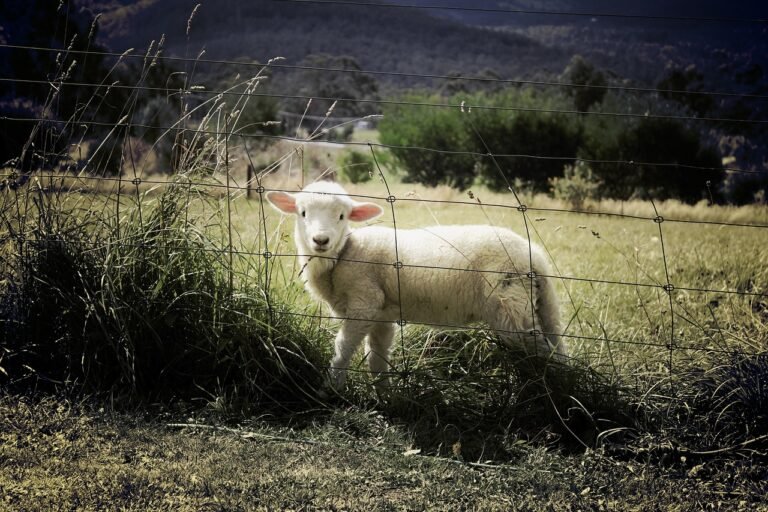
Bethlehem was also where lambs were raised for the temple sacrifice. The shepherds in these fields were not incidental figures. They were tasked with identifying the perfect lamb for sacrifice. Their appearance at the scene of the Savior’s birth was not accidental—it was divinely ordained. These shepherds knew what a blameless lamb looked like; they could examine it for blemish. They understood sacrifice. And now, the Lamb of God Himself—the ultimate, spotless sacrifice—is born right before their eyes.
In Bethlehem, prophecy, symbolism, and divine purpose converge. The “House of Bread” becomes the cradle of the One who satisfies our deepest hunger and restores what sin fractured. The location itself speaks: God’s plan is precise, His timing intentional, and His provision complete.
The Magi came from the East, guided by a star—revelation in a language they understood. They brought gifts that declared who Jesus is: King, Priest, and Sacrifice.
Jesus enters darkness. Light shines. Hope is no longer theoretical—it is embodied.
Christmas calls for alignment, not just admiration
The manger is not sentimental—it is prophetic. From birth, Jesus is marked for surrender, for sacrifice.
Light shines in the darkness, and the darkness does not overcome it. Christmas is Genesis happening again— but this time the Light does not merely speak. It enters suffering.
Not all who came to the Light came from nearby fields. Mathew (Mathew gospel) tells us of Magi from the East—outsiders, scholars, watchers of the heavens. They followed a star, not because they were chasing mystery, but because they understood signs. In the ancient world, the heavens were believed to declare divine action. The star was not astrology—it was revelation. God speaks a language they understand and draws them toward truth. While shepherds are led by angels, the Magi are led by light in the sky. Both journeys lead to the same child.
The Magi bring gifts fit for a king, a priest, and one who will die—gold, frankincense, and myrrh. Even at His birth, Jesus is revealed as ruler, mediator, and sacrifice.
Jesus is not born into peace but born under tyranny. Not into safety but into threat. Families flee. Innocent lives are lost. And yet, this is precisely where God chooses to dwell. Biblical hope is not optimism. It is not denial. It is the certainty that God has already entered the brokenness.
The angels do not promise improvement—they announce a Savior.
Christmas calls for more than celebration. It calls for alignment.
We cannot sing of peace and make peace optional. We cannot celebrate light while living in darkness. We cannot welcome the Savior while ignoring the suffering He came to heal.
Christmas does not end at the manger. It continues in us. The Word shall become flesh when love takes action, when compassion crosses boundaries, and when hope enters ordinary places.
This is how Christmas speaks to a world coming apart—not as escape, but as God’s enduring presence.
A RESPONSE TO THE INCARNATE CHRIST
Christmas does not ask us merely to reflect. It asks us to respond.
The shepherds did not remain in the fields.
The Magi did not stop at the star.
They moved toward the Light.
Tonight, the same invitation stands.
If you have admired Jesus from a distance but never surrendered your life to Him…
If you have celebrated Christmas but never centered your life on Christ…
If you are weary, burdened, fractured, or longing for hope that is real…
The Word who entered the wound is still calling.
He does not come to condemn you.
He comes to dwell with you.
To forgive.
To restore.
To make all things new.
This is not a call to religion.
It is a call to relationship.
If you desire to say yes to Christ—to place your life in His hands, to receive His grace, to walk in His light—I invite you to respond. You may do so quietly in your heart and make the following prayer as yours:
PRAYER
“Lord Jesus, I acknowledge my need for You.
I believe You are the Word made flesh, the Savior who entered my brokenness.
Forgive me. Restore me. Make Your home in my heart.
I surrender my life to You.
Amen.”
Christmas is not complete until Christ is received.
The Light has come.
The Word has drawn near.
The invitation is before you.