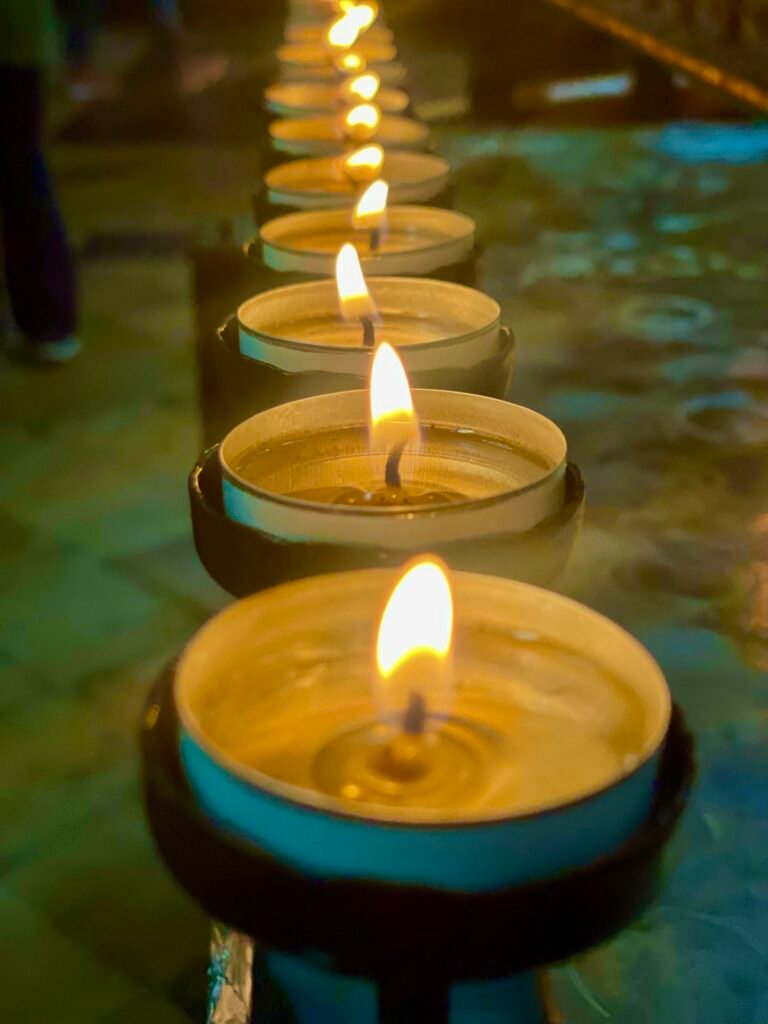

Before the Sea Opens, There Is a Table..
And Before the Table Moves, There Is a Presence.
Receiving Redemption Before Walking in Deliverance..
Key Texts: Exodus 12–15; Exodus 13:21–22; Isaiah 53; Isaiah 63:9–14; John 1:14, 1:29; Luke 22; Hebrews 13:5; Romans 8:31; 1 Corinthians 11
Introduction: God’s Order Is Never Accidental
One of the most overlooked truths in the Exodus story is this: God does not begin with the sea.
He begins with a lamb.
We often rush toward Exodus 14 — the drama, the power, the miracle.
But God intentionally pauses history in Exodus 12.
Before Israel sees deliverance, before Pharaoh is defeated, before chains fall and waters part, God gathers His people around a table.
Why?
Because deliverance must first be received before it can ever be witnessed.
And even more —
before the table moves forward, God Himself steps in front of His people.
1. The Lamb: God’s Detailed Grace
Exodus 12 is filled with detail — and none of it is random.
“Your lamb shall be without blemish.” (Exod 12:5)
Perfection was required. Not sincerity. Not effort. Not good intentions. Only a lamb without flaw.
Centuries later, John the Baptist declares:
“Behold, the Lamb of God, who takes away the sin of the world.” (John 1:29)
Jesus does not become the Lamb accidentally.
He fulfills a category God established long before Egypt.
The timing is precise:
- Chosen on the 10th day
- Slain on the 14th day
Jesus enters Jerusalem on the 10th of Nisan
and is crucified on Passover.
No broken bones:
“Not one of his bones shall be broken.” (Exod 12:46)
“These things happened so that Scripture would be fulfilled.” (John 19:36)
Even in death, Jesus fulfills Exodus.
God’s redemption plan is not improvised.
It is exact.
2. The Blood: Salvation Applied, Not Admired
In Exodus, blood is not symbolic — it is decisive.
“The blood shall be a sign for you… when I see the blood, I will pass over you.” (Exod 12:13)
The blood had to be:
- Applied
- Visible
- Trusted
Being Hebrew was not enough.
Living in Goshen was not enough.
Sympathizing with Moses was not enough.
The blood had to be on the doorposts.
Paul later echoes this truth:
“Christ, our Passover lamb, has been sacrificed.” (1 Cor 5:7)
Salvation has always worked this way:
Not proximity
Not heritage
Not intention
But faithful application.
3. The Table: Redemption Is First Received
This is the moment many miss.
God does not say, “Stand and wait.”
He says, “Sit and eat.”
“They shall eat the flesh that night.” (Exod 12:8)
Before Israel walks out free, they must eat the lamb.
Jesus mirrors this exactly:
“This is my body, given for you.” (Luke 22:19)
Redemption is not only something God does for us — it is something we must receive into us.
“Whoever feeds on my flesh and drinks my blood has eternal life.” (John 6:54)
The table is not ritual. It is relationship.
4. From Passover to the Cross
Isaiah pulls the curtain back:
“He was led like a lamb to the slaughter.” (Isa 53:7)
What God prevented Abraham from doing in Genesis 22, He does Himself at Calvary.
“He did not spare His own Son, but gave Him up for us all.” (Rom 8:32)
In Exodus:
- The lamb dies
- The son lives
In the Gospel:
- The Son dies
- We live
This is not coincidence. It is covenant.
5. God Does Not Rescue — and Then Disappear
After the blood on the doorposts…
After the midnight judgment…
After Israel walks out free…
We might expect God to step back.
But Scripture tells us the opposite.
“By day the LORD went ahead of them in a pillar of cloud…
and by night in a pillar of fire…
Neither the pillar of cloud by day nor the pillar of fire by night left its place.”
(Exodus 13:21–22)
This is astonishing.
God does not merely give instructions.
God goes with them.
God goes before them.
Salvation is not just an event.
It is the beginning of a life of presence.
6. The Pillar: Visible Theology
Notice what the pillar does:
- It guides
- It protects
- It illuminates
- It never leaves
This is not metaphor alone.
This is theology you can see.
Isaiah later reflects:
“In all their distress He too was distressed… He lifted them up and carried them.” (Isa 63:9)
God does not save from a distance.
He dwells with His people.
The same God later says:
“I will never leave you nor forsake you.” (Heb 13:5)
7. Fire by Night, Cloud by Day
Why both?
Cloud tempers the blazing desert sun.
Fire breaks the terror of wilderness darkness.
God does not overwhelm His people with His glory.
He adapts His presence to their weakness.
This points forward:
“The Word became flesh and dwelt among us.” (John 1:14)
Just as God clothed His glory in cloud and fire,
He later clothed it in flesh.
Same God.
Same heart.
Different chapter.
8. The Presence Comes Before the Sea
This matters deeply.
God does not wait for courage.
God does not wait for confidence.
God does not wait for strong faith.
He goes before them while fear still lives in their hearts.
So when Israel reaches the sea:
They are not abandoned.
They are not lost.
They are not being tested without guidance.
The God who will part the waters
is already standing in front of them.
9. The Pillar Moves — and So Does Faith
In Exodus 14, the pillar does something remarkable.
It moves:
- From in front of Israel
- To behind them
Standing between Israel and Egypt.
The same presence that guides
also protects.
God becomes:
- Light to His people
- Darkness to their enemies
This is covenant faithfulness in motion.
10. The Order of Redemption
Now the sequence becomes clear:
- The Lamb — salvation is secured
- The Blood — salvation is applied
- The Table — salvation is received
- The Presence — God goes with them
- The Sea — faith is tested and confirmed
- The Song — worship erupts
Nothing is rushed.
Nothing is missing.
Nothing is accidental.
Before deliverance becomes visible,
it is walked out with God.
11. Emmanuel: God Before, With, and For Us
What Israel saw in Exodus,
Paul later declared in words:
“If God is for us, who can be against us?” (Rom 8:31)
Notice the connection:
- God before us → nothing ahead can defeat us
- God with us → nothing around us can overwhelm us
- God for us → nothing against us can finally prevail
The pillar wasn’t just guidance.
It was assurance.
It preached without words:
“You are not walking into danger alone.”
Emmanuel does not mean trouble won’t rise.
It does not mean enemies won’t pursue.
It means no circumstance gets the final word.
Israel still faced Pharaoh.
They still stood before the sea.
But the most important truth was already settled:
God was in front of them.
That’s why fear doesn’t get the last sentence.
That’s why opposition isn’t ultimate.
That’s why hope survives deserts, nights, and seas.
Final Reflection
Have I trusted the Lamb — or only admired Him?
Have I applied the blood — or assumed safety?
Am I waiting for seas to part while God invites me to the table?
Before the sea opens.
Before the battle is won.
Before the song is sung.
God is already there.
Closing Prayer
Dear Lord,
Thank You for the Lamb who was slain,
the blood that marks us,
the table that nourishes us,
and the presence that never leaves us.
When the future feels uncertain, go before us.
When the present feels heavy, stand with us.
When the past accuses, remind us You are for us.
Teach us to trust Your order,
to receive before we run,
and to walk forward knowing
we are never alone.
Before the sea opens,
we rest in You.
Amen.