A Character Study of Noah
Key Texts: Genesis 6–9; Hebrews 11:7; Romans 12:2
1. Noah’s Context: Righteousness in a Ruined World
Noah was born into a time when evil had reached its fullest expression. Scripture tells us that “every inclination of the thoughts of the human heart was only evil all the time” (Genesis 6:5). Human identity was deeply corrupted, violence filled the earth, power was abused, and creation itself groaned under the weight of rebellion. By every standard, righteousness had vanished.
This stands in stark contrast to Adam. Adam lived in a perfect environment, walked with God in the garden, lacked nothing—yet still chose disobedience and lost communion with God. Noah, however, emerges in a world already broken beyond repair, and yet Scripture describes him as “a righteous man, blameless among the people of his time, and he walked faithfully with God” (Genesis 6:9).
God looked upon the earth and found one man whose heart still leaned toward Him.
Reflection: Righteousness is not the product of environment but of relationship. Noah did not walk with God because the world was good—he walked with God because God was his priority.
2. Noah and Us: A Mirror of Our Times
When we look around today, it’s hard not to see echoes of Noah’s world. War has become normal. Violence is casual. Cruelty is often excused—or even celebrated. Truth feels negotiable. Compassion is shrinking. We live in an age of unprecedented progress, yet our ability to live well together feels fragile.
We know more than any generation before us, yet we struggle to love deeply. We are constantly connected, yet increasingly isolated. Many of us feel overwhelmed, tempted to blend in, afraid to live differently, worried about standing outside the system of this world.
Noah’s life reminds us of a powerful truth:
We do not have to conform to the patterns of this world to survive in it.
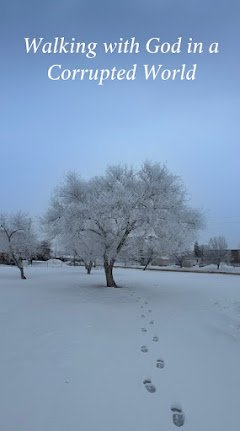
Instead, we are invited—like Noah—to walk with God.
Times change. Cultures shift. Technology evolves. But God remains the same—patient, holy, and calling His people back to Himself. Yet Scripture also reminds us that we live in volatile times. The clock is ticking, often quietly. Judgment and grace can arrive without warning.
3. Hearing and Trusting God When It Makes No Sense
One of Noah’s most striking qualities was his trust in God’s word. God asked him to build an ark and warned of rain and a flood—something completely unimaginable in that world. Rain had never fallen before. There was no precedent, no logic, no visible evidence.
Yet Noah believed God.
Hebrews 11:7 tells us:
“By faith Noah, when warned about things not yet seen, in holy fear built an ark to save his family.”
We can safely assume Noah was mocked, ridiculed, and dismissed. He likely looked foolish, obsessive, even insane to those around him. And still—he obeyed.
How familiar this feels. When we choose to live according to God’s call, we are often misunderstood. Faithfulness can cost us comfort, popularity, and sometimes relationships. The question Noah’s life asks us is simple but piercing:
When obedience isolates us, do we quit—or do we stay the course?
4. Faithfulness in the Ordinary and the Enormous
God’s assignment to Noah was massive. Building the ark required endurance, discipline, patience, and years of unseen faithfulness. Noah didn’t offer excuses. He didn’t negotiate the task. Scripture repeatedly says, “Noah did everything just as God commanded him.”
This challenges us to ask
- Are we giving God our best—or only what is convenient?
- Do we treat our work, calling, and responsibilities as worship?
Whatever God places in our hands—visible or hidden—Scripture calls us to do it “as unto the Lord.” Faithfulness is not measured by scale but by surrender.
5. A Life That Saves More Than Just Ourselves
Noah’s obedience did not only save him. It preserved his family and ensured the future of humanity. Often, we underestimate the impact of our faithfulness. Our obedience may be shaping lives we will never fully see.
Our lives are not meant to be wasted—but invested. Lived in a way that reflects God’s purposes, blesses His people, and honors His creation.
6. Worship as First Response
When Noah stepped out of the ark, the first thing he did was build an altar and offer a sacrifice to God (Genesis 8:20). Before rebuilding life, before settling into a new beginning, Noah worshiped.
Gratitude and reverence preceded comfort.
How often do we rush past this step? How often do we enjoy God’s deliverance but forget to return thanks? Worship realigns our hearts and reminds us who carried us through the storm.
7. Noah’s Fall: A Sobering Reminder
Despite all his faithfulness, Noah also fell. After the flood, he became drunk and exposed in his weakness. Scripture does not hide this. It reminds us that no spiritual experience makes us immune to failure.
This moment teaches us humility. None of us are above reproach. If we stop walking closely with God, if we neglect daily communion, we become vulnerable. The enemy does not rest. Grace invites us to stay dependent—not confident in past obedience, but rooted in ongoing relationship.
Reflective Questions
- What does it look like for me to “walk with God” in my current season?
- In what ways am I tempted to conform rather than be transformed?
- Where is God asking me to trust His word even when it feels illogical?
- Am I giving God my best—or just what remains after everything else?
- How might my faithfulness be impacting others beyond what I can see?
- Is gratitude and worship my first response after deliverance?
- What practices help me remain dependent on God daily?
Closing Prayer
Father God,
Thank You for the life of Noah—a reminder that faithfulness is possible even in the darkest times. Teach us to walk with You when the world pulls us in every other direction. Give us ears to hear Your voice and hearts that trust You even when the path ahead makes no sense.
Help us to remain obedient when we are misunderstood, faithful when we are weary, and humble when we succeed. Guard us from pride and complacency. Draw us into daily communion with You so that we may stand firm and finish well.
May our lives honor You, bless others, and reflect Your grace until the day You call us home.
In Jesus’ name,
Amen.