
When Generosity Becomes a Way of Life
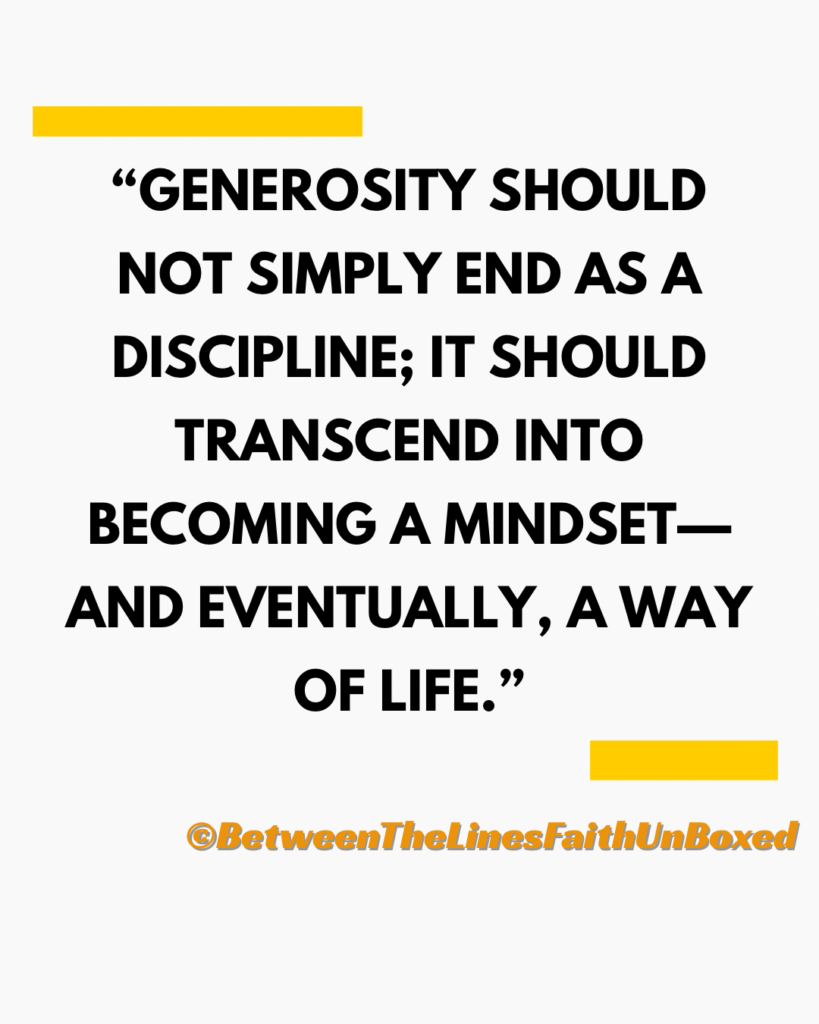
Today I was listening about generosity. As it began to sink in, my heart and mind started asking deeper questions: what if generosity was never meant to remain just a discipline? What if it was meant to grow into a mindset — and eventually shape who we become?
Often we think of generosity as something occasional. Something we plan, measure, or practice when circumstances allow. But the more I reflected on it, the more I wondered if true generosity is really about the posture of our lives. It changes how we see what we have.
When we read the Bible, generosity is rarely presented as a mere act of giving something away. Instead, it flows from the character of God Himself. God gives before we deserve, before we ask, and often more than we expect. From creation to redemption, the story of Scripture is a story of divine generosity.
Jesus reflects this heart of God. In the Luke 6:38, He teaches that giving is not just about loss but about participation in God’s economy: give, and it will be given to you. The point is not a formula for wealth, but a transformation of the heart. Generosity changes us. It moves us from ownership to stewardship.
The early church understood this deeply. In the Acts we see believers sharing what they had so that no one among them was in need. Their generosity was not forced; it was the natural overflow of lives that had encountered grace. When people experience the generosity of God, they begin to mirror it.
The apostle Paul later explains this beautifully in 2 Corinthians 9:7: each person should give what they have decided in their heart to give, not reluctantly or under compulsion, for God loves a cheerful giver. This tells us something important—biblical generosity is not merely external behavior. It is internal transformation.
Even the wisdom literature recognizes this principle. Proverbs 11:25 says that a generous person will prosper, and whoever refreshes others will themselves be refreshed. The paradox of generosity is that open hands tend to lead to open lives.
And ultimately, generosity finds its clearest expression in Christ Himself. In Matthew 10:8 we hear the principle: freely you have received; freely give.
What This Means for Us Today
In modern life, generosity can easily become scheduled, calculated, or reduced to occasional charity. But Scripture calls us to something deeper—a generous posture toward life itself.
Generosity is not only about money. It includes:
- Time
- Attention
- Encouragement
- Hospitality
- Forgiveness
- Compassion
A generous life is a life that refuses to live closed.
Philosophically, generosity shifts us from scarcity thinking to abundance thinking. Scarcity says, If I give, I lose.
The Kingdom perspective says, What I have was given to me in the first place.
Theologically, generosity is a reflection of being made in the image of a giving God.
Practical Principles for Living Generously
1. Remember that everything we have is entrusted, not owned
Psalm 24:1 teaches that the earth is the Lord’s and everything in it. When we see ourselves as stewards rather than owners, generosity becomes more natural.
Practice:
Regularly ask: How can what I have serve someone else today?
2. Start with small, consistent acts
Generosity in Scripture often appears in daily life—meals shared, needs noticed, kindness extended.
Practice:
- Buy someone a meal
- Encourage someone intentionally
- Give time where it’s inconvenient
Small acts form a generous heart.
3. Let generosity flow from gratitude
People who deeply grasp grace tend to become generous people.
Practice:
Keep a habit of thanking God for what you already have. Gratitude fuels generosity.
4. Give intentionally, not just emotionally
Paul encouraged thoughtful giving. Planned generosity ensures that our values shape our actions.
Practice:
Set aside a portion of income, time, or energy specifically to bless others.
5. Be generous beyond material things
Some of the most powerful generosity is invisible:
- Listening without rushing
- Forgiving someone who hurt you
- Being patient with people
- Opening your home or life
These often reflect Christ more than money does.
A Deeper Perspective
Many theologians note that generosity is closely tied to spiritual freedom. When we cling tightly to things, they begin to shape us. But when we live open-handed, our hearts remain free.
Early Christian thinkers often described generosity as a participation in God’s nature. To give is, in a small way, to imitate the Creator.
C.S. Lewis once suggested something similar in spirit: if our giving does not stretch us, we may not yet be living generously.
A Simple Reflection
Generosity begins as a choice.
Then it becomes a discipline.
Eventually, it becomes part of who we are.
When generosity matures into a mindset, we no longer ask “Do I have to give?”
Instead we begin asking, “What can I give?”
And that is where generosity stops being an act—and starts becoming a life.